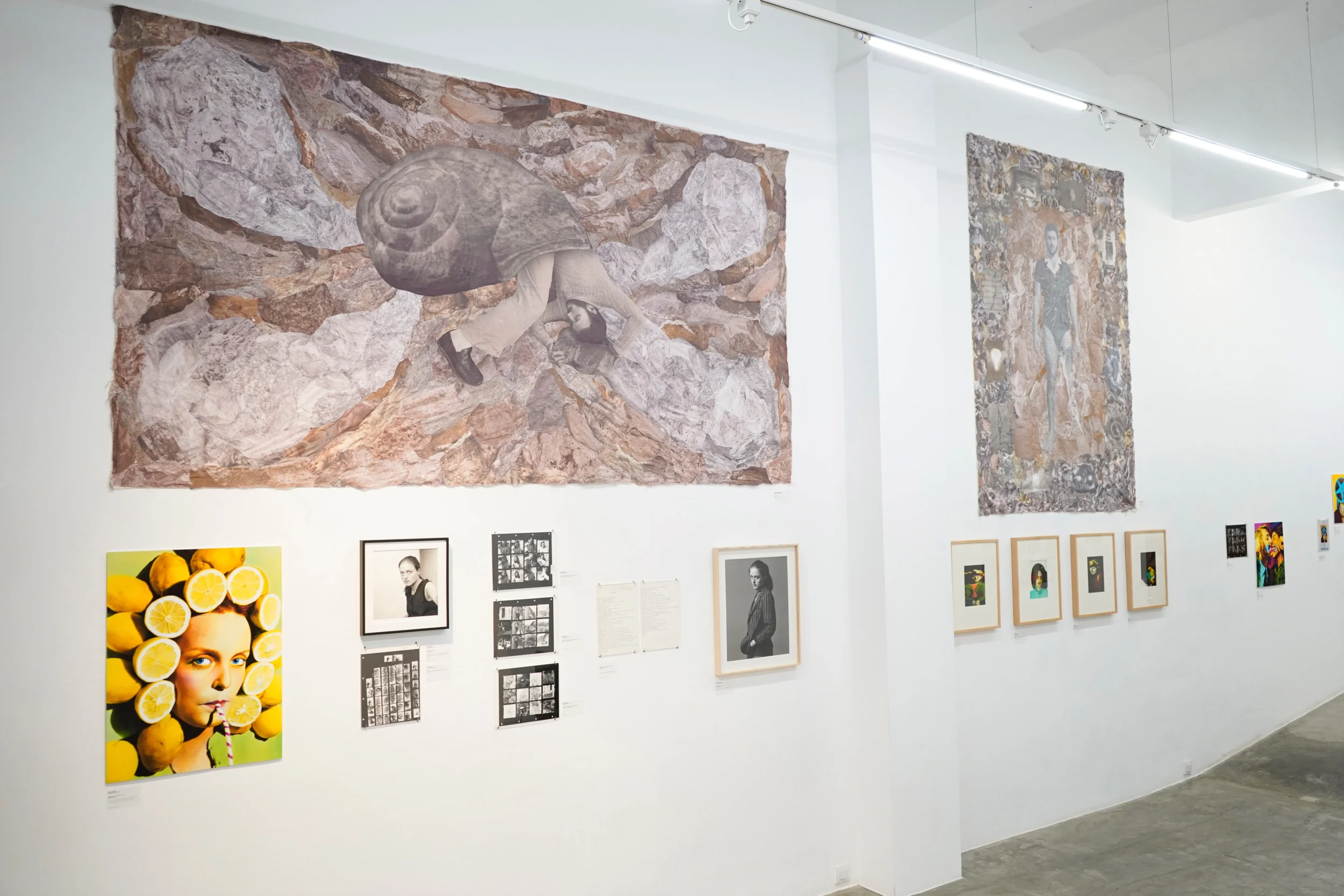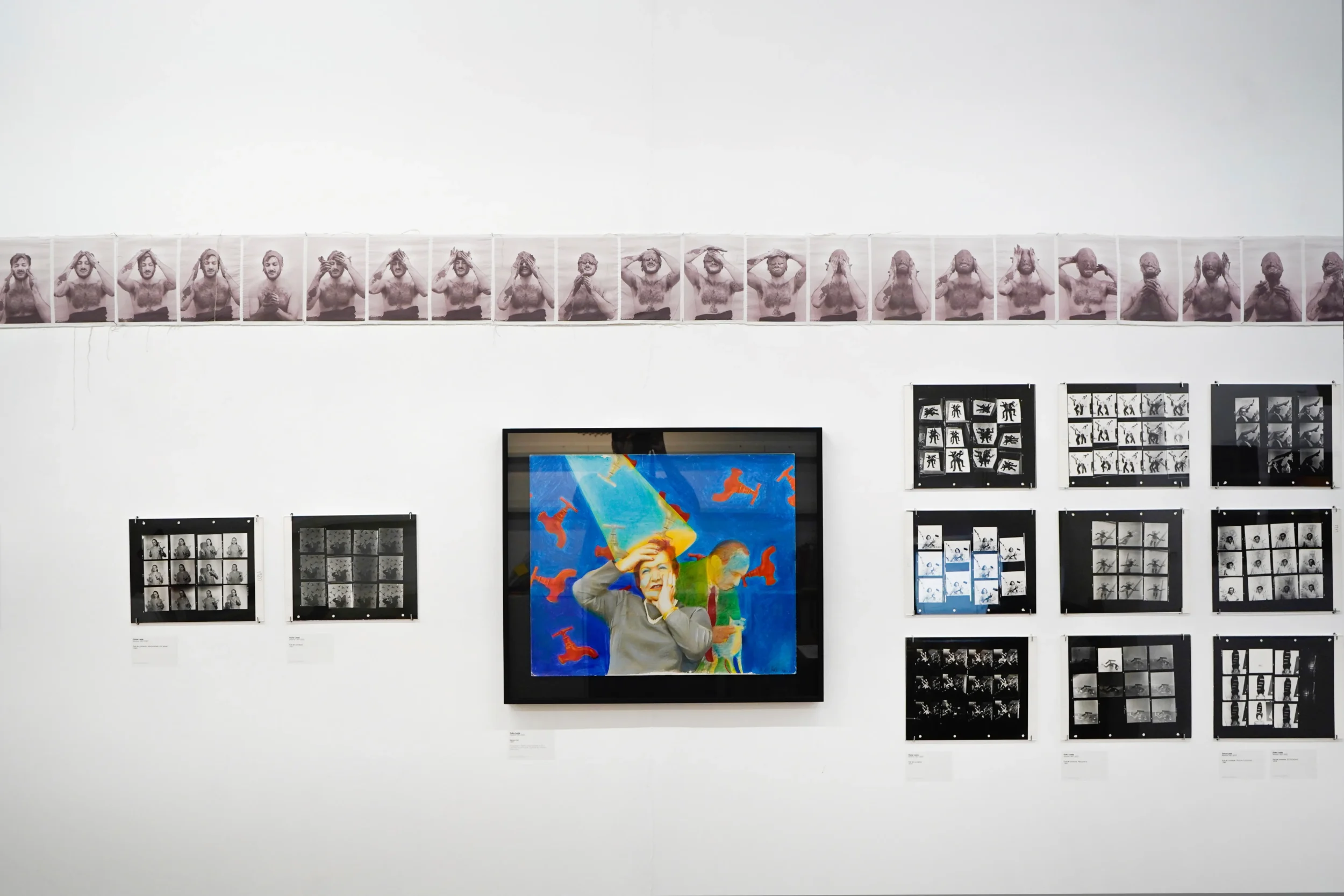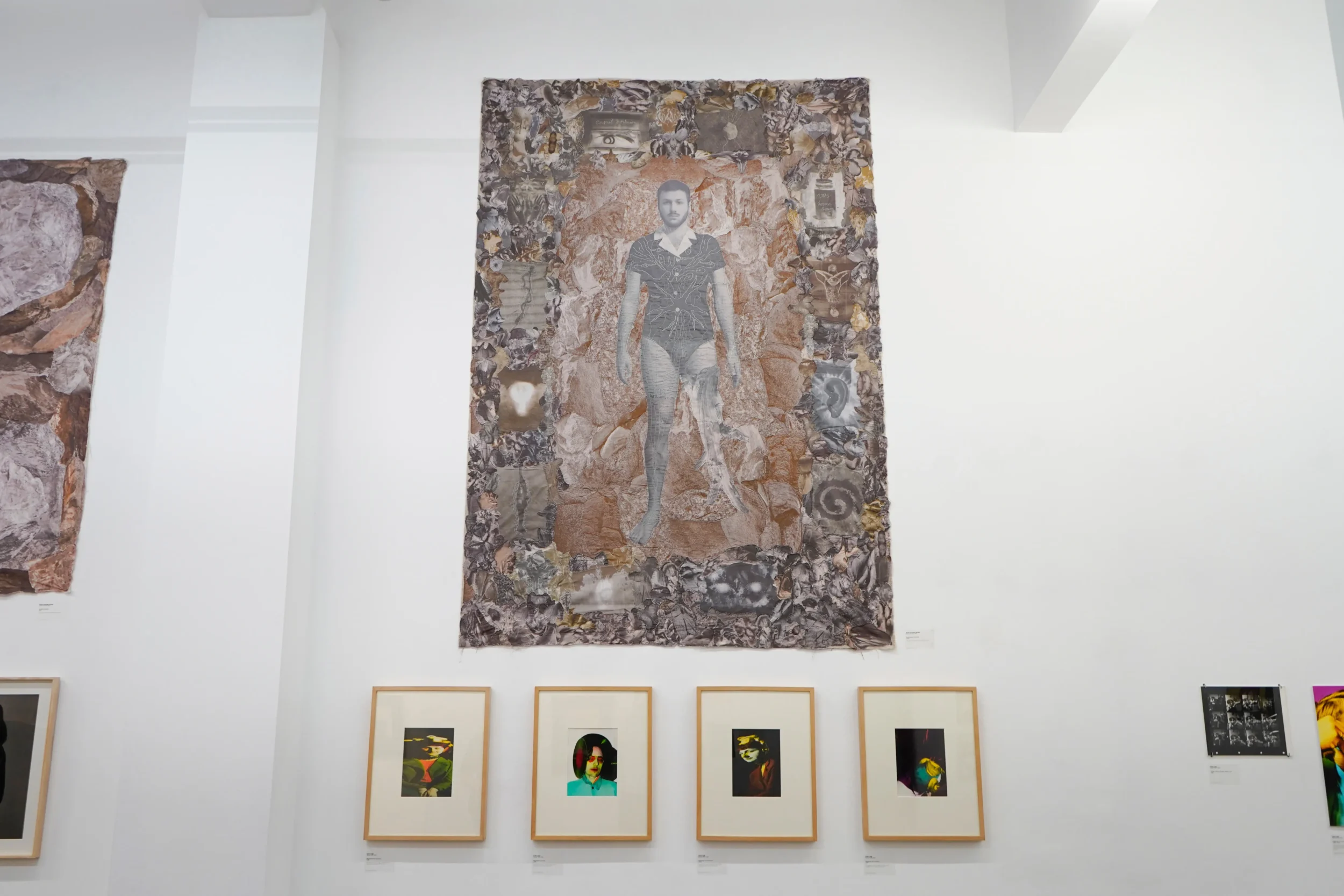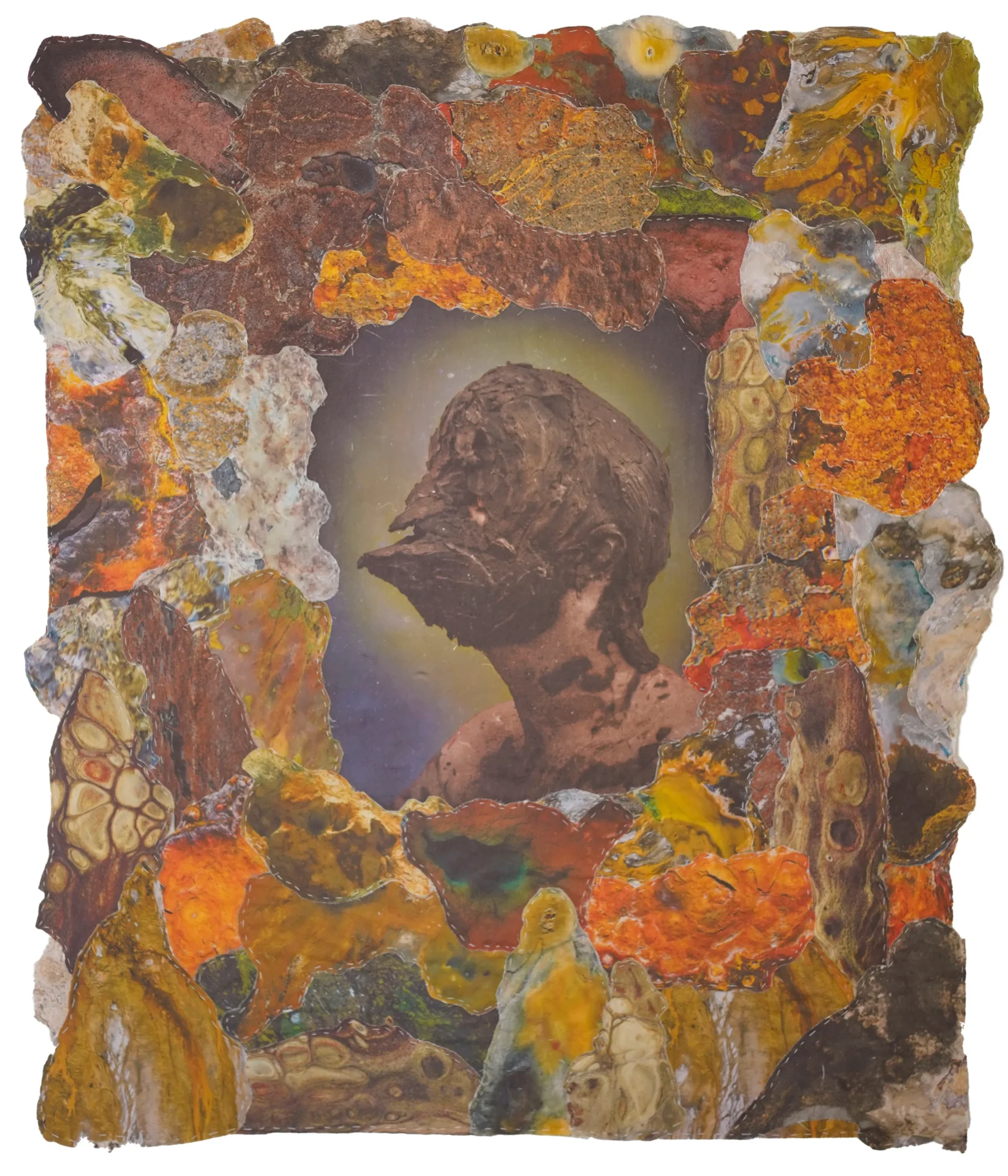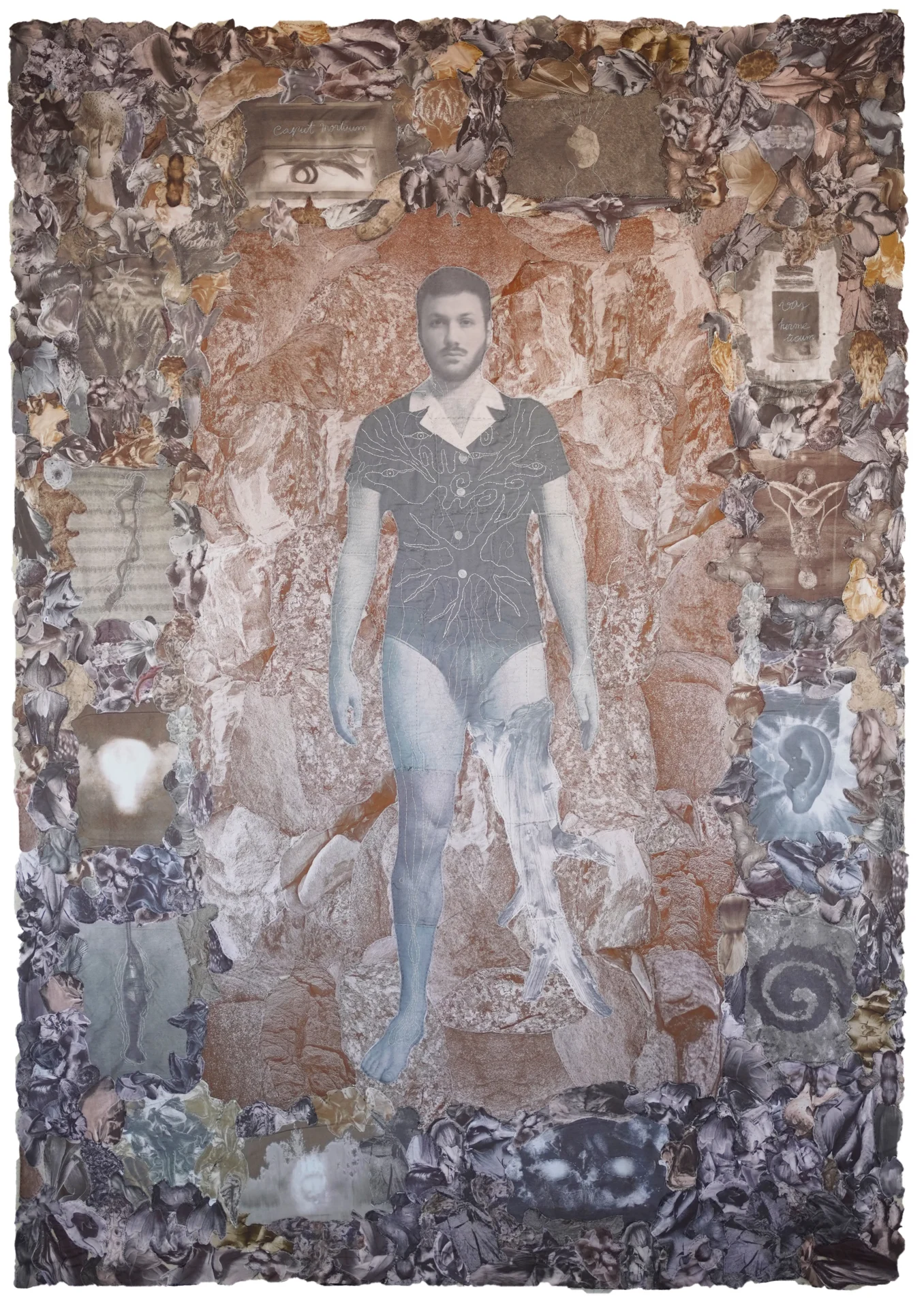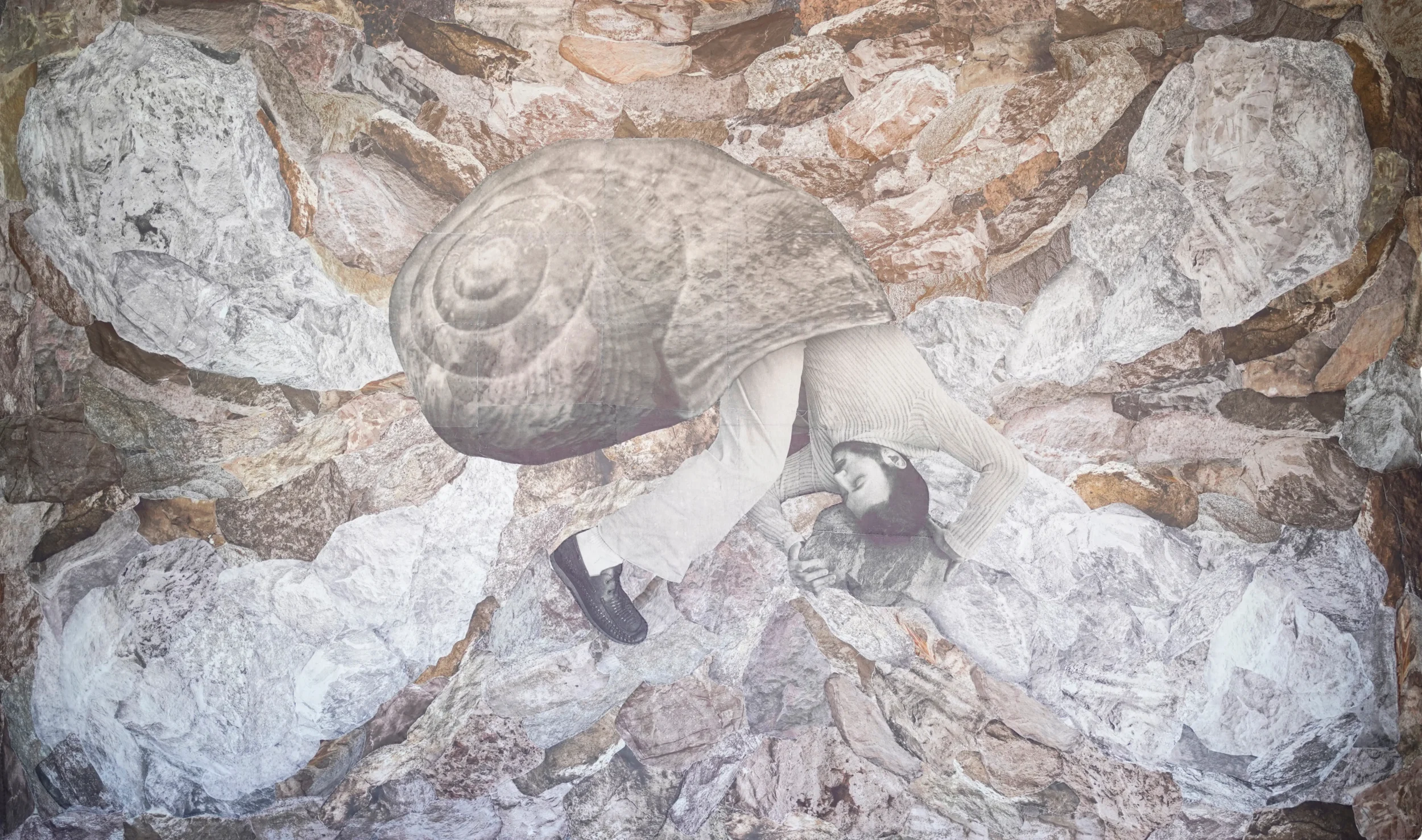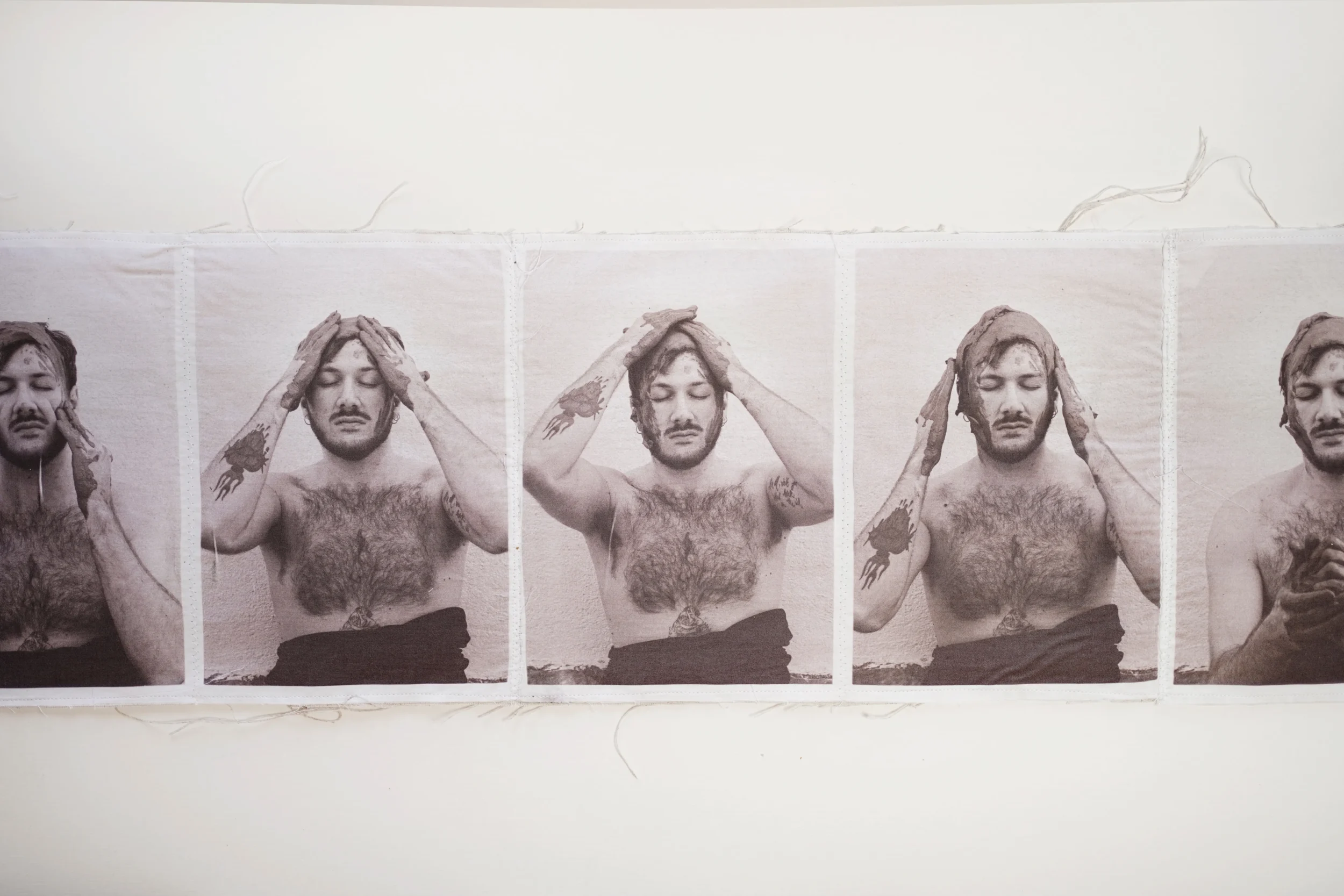
Rubén González Bonilla, graduated in Photography from the EASD Josep Serra i Abella and completed his studies at the IEFC, earning a double qualification in documentary techniques and in the theory and practice of photography. Through photography and textiles, he explores the relationships between the body and its surroundings, approaching the body as a sensitive, transformable and photographable material while investigating new photographic techniques. His work has been exhibited at emerging art festivals such as STRIPART and Mirada Pilot. His photographs were selected for the 2025 Ibero-American Biennial of Contemporary Jewellery, in collaboration with Gema Pinedo de Pedro.
“…the future we are inaugurating here is a metallic thread. It is something deliberately meant to be destroyed. Of everything we have lived through, only this thread will remain… The metallic thread will not become food for the vultures. Our metallic thread cannot decay. It is a thread destined to endure forever. We, who are gathered here at this moment, begin it with the intention that it should be eternal. We want a metallic thread because, from beginning to end, it is made of the same metal… We, the artists of the great enterprise, know that the work of art does not understand us. And that to live is a suicidal mission.”
Clarice Lispector, Inaugural Speech, in The Drawer’s False Bottom, collected in Complete Stories. (Translation adapted from the Spanish edition published by Siruela.) 2025 2025.
Every story begins with a game of magical words, with a spell that sweetens your listening, reminding you where you need to go.
Right now, I am sitting on a black chair, surrendering my whole body to the great life of a copyist.
I seeeeee… I seeeeee…
What do I see? What do you see?
Now…..
…..reeeeeeeeeeeeeeeeeeeead…..
Let your tongue move inside your mouth. Move it with me. Let it accompany these words in the same way my hand accompanies them as it writes.
There is a home. A small house enclosed within walls.
Can you feel it…?
Breathe… do it with me.
Inhale… Exhaaaale.
Sing with your breathing…
Close your eyes for a moment.
You will hear murmuuurs around you. Do not be afraid…
Now return to this page.
I seeeeee…
What do I see?
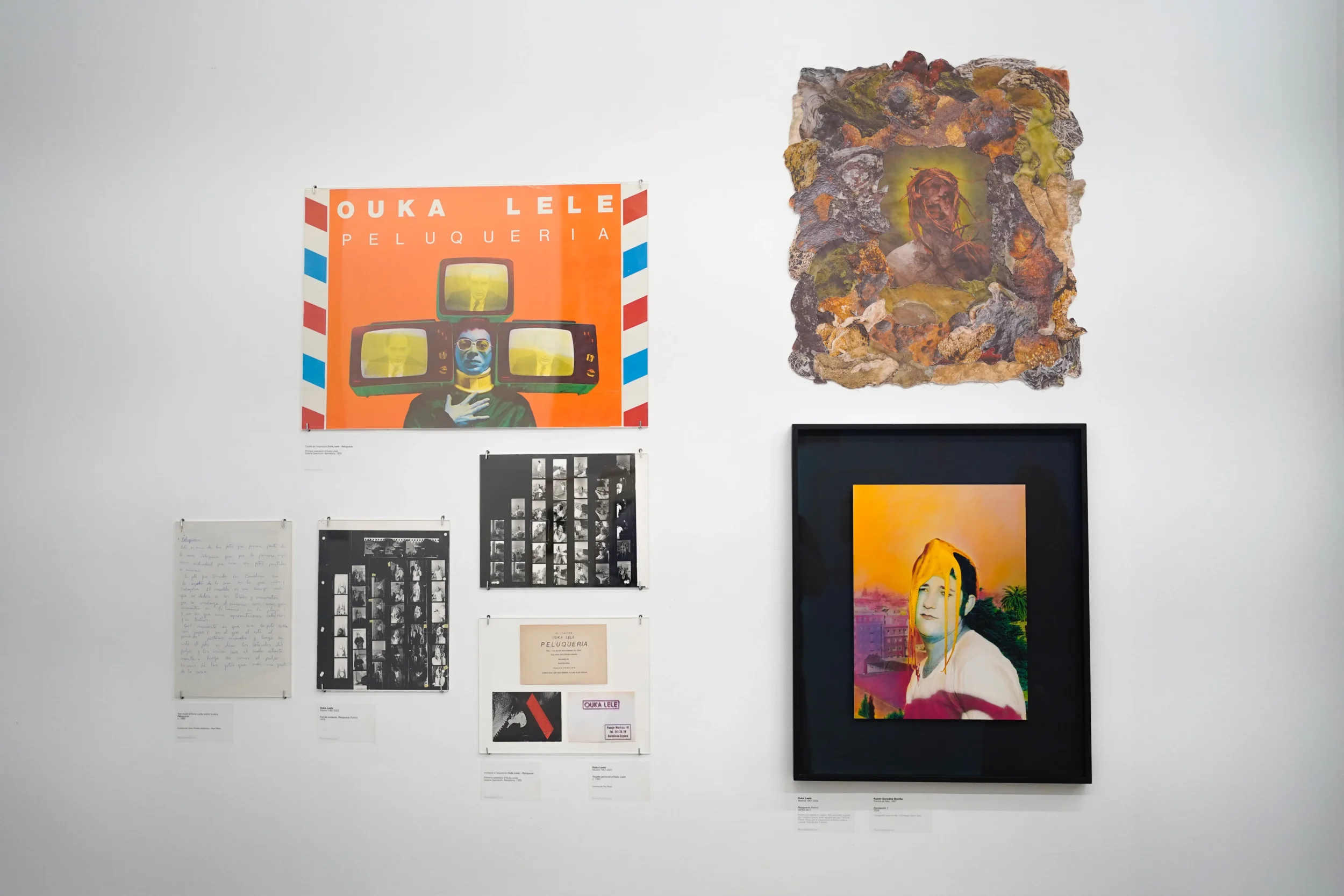
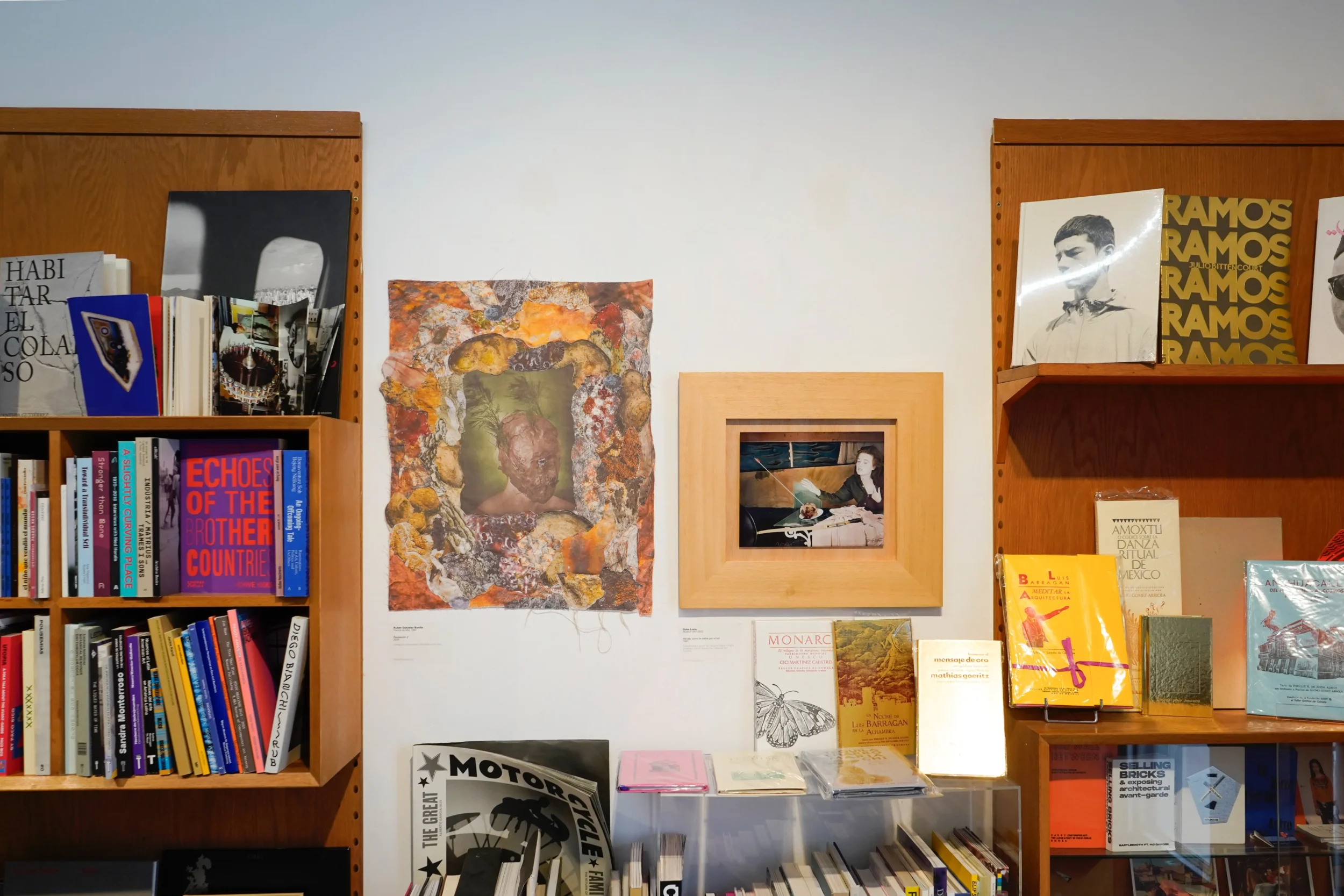
Veo, Veo ¿Qué ves? This is how the poem La Fotografía (1982) by Ouka Leele ends, born from the “Horteliana” en “zelestes procesiones de sueños hechiceros” (Europa Requiem?!” El Hortelano José Alfonso Morera Ortiz 1978) .
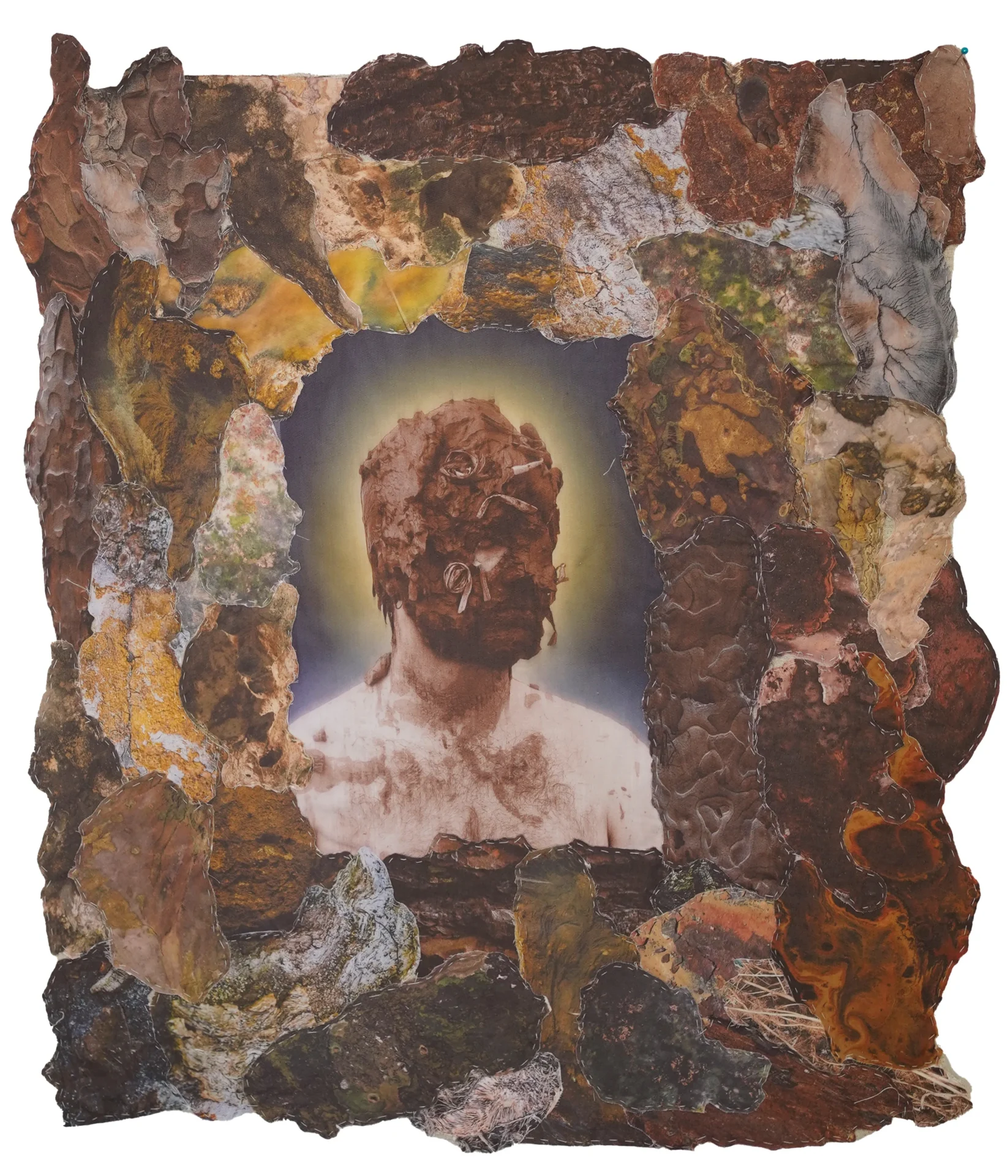
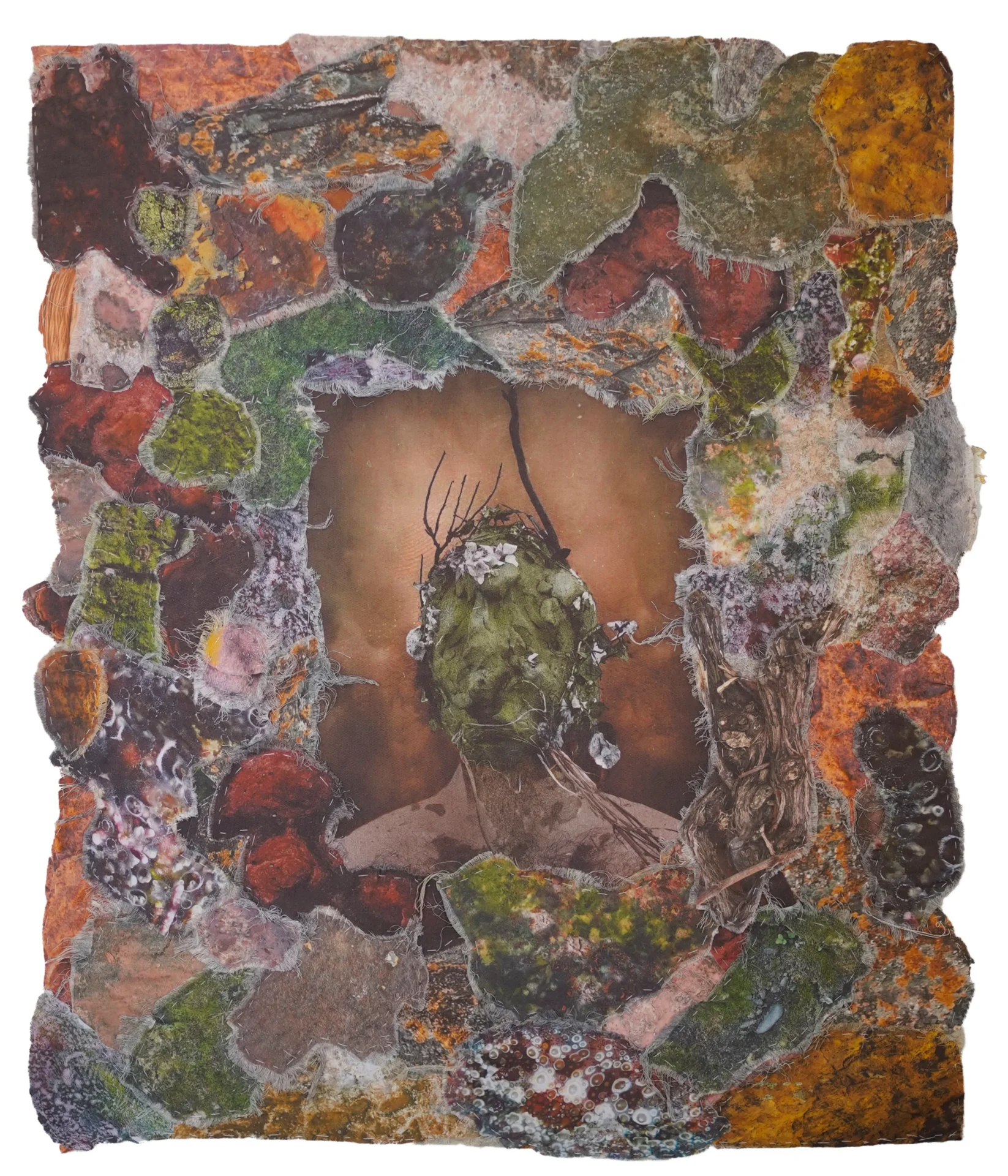
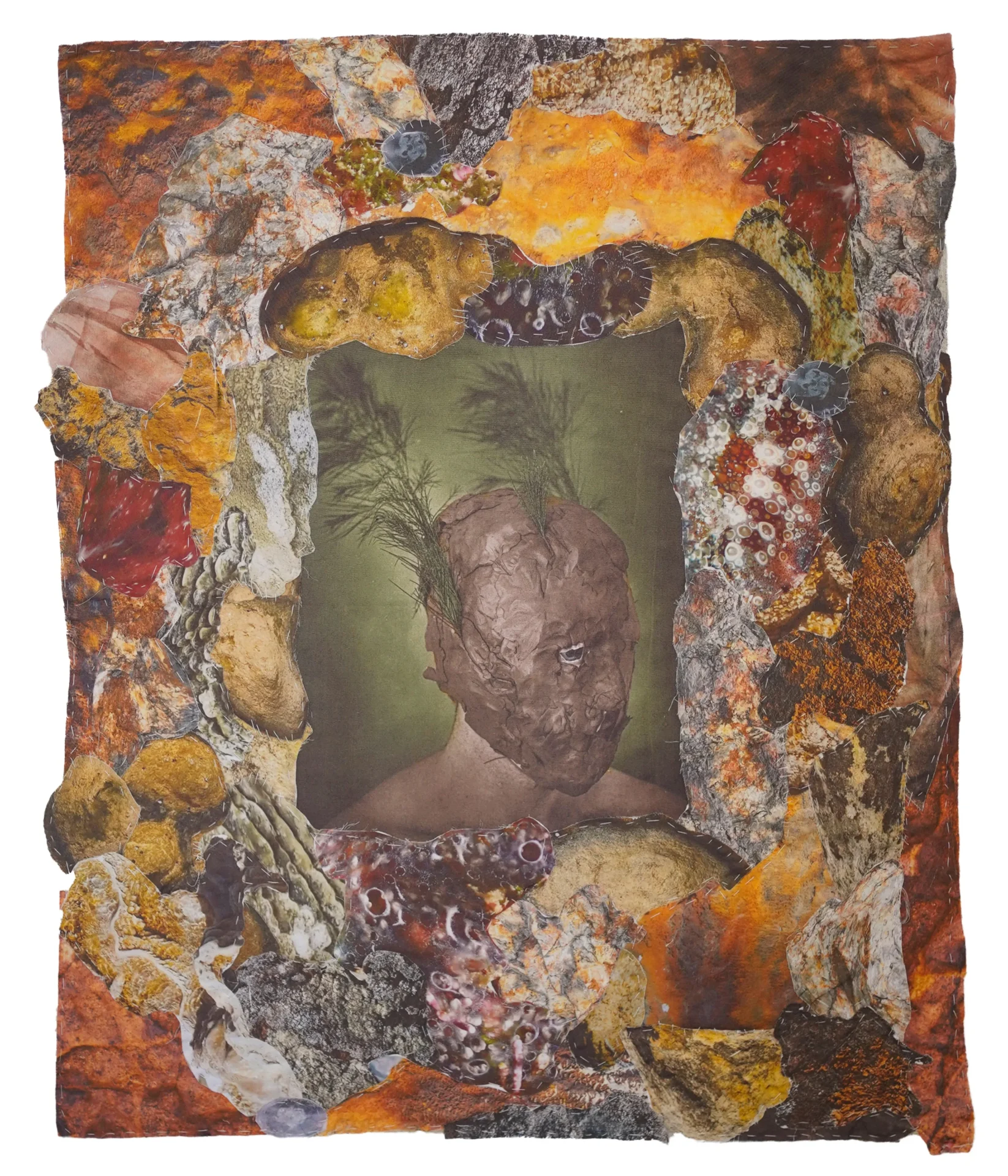
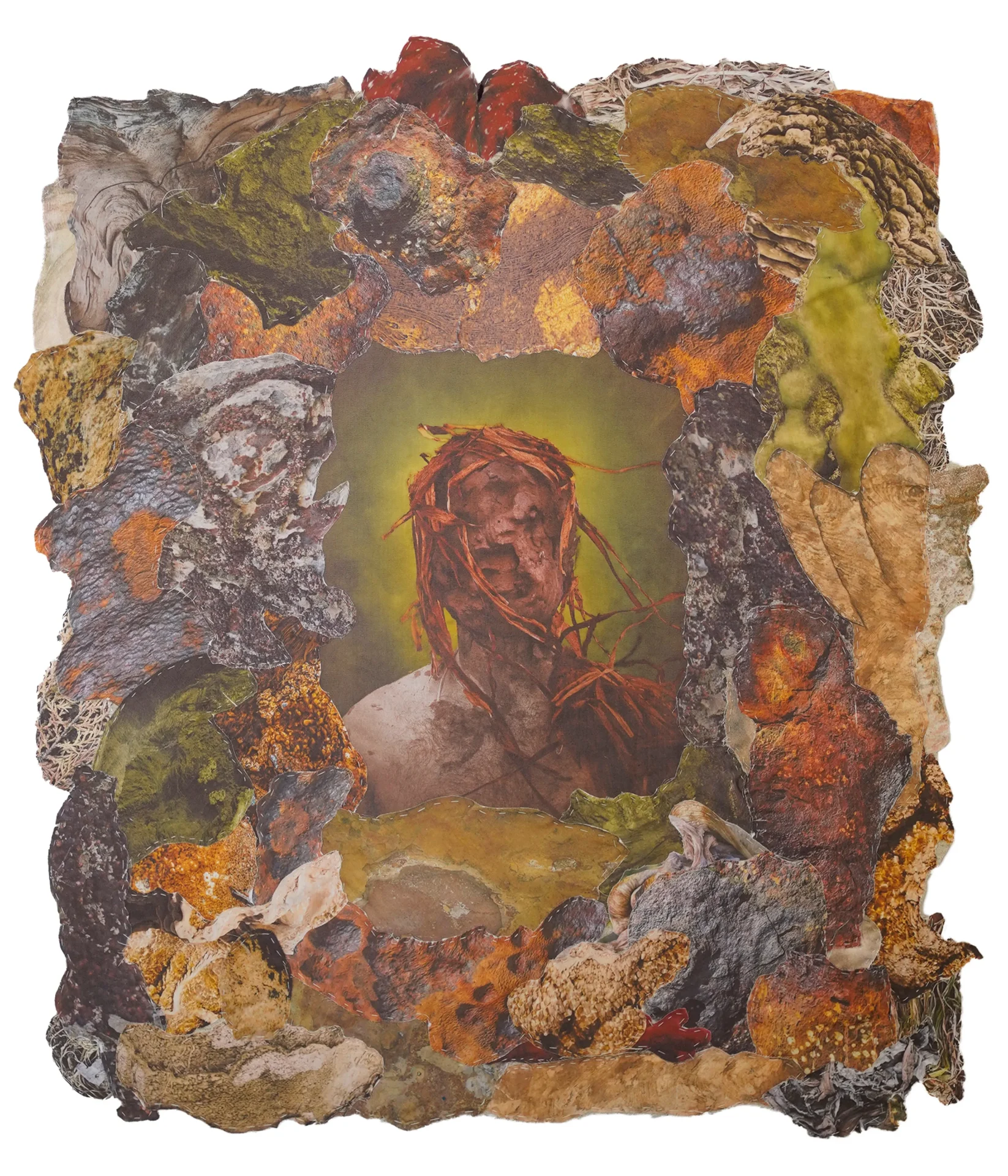
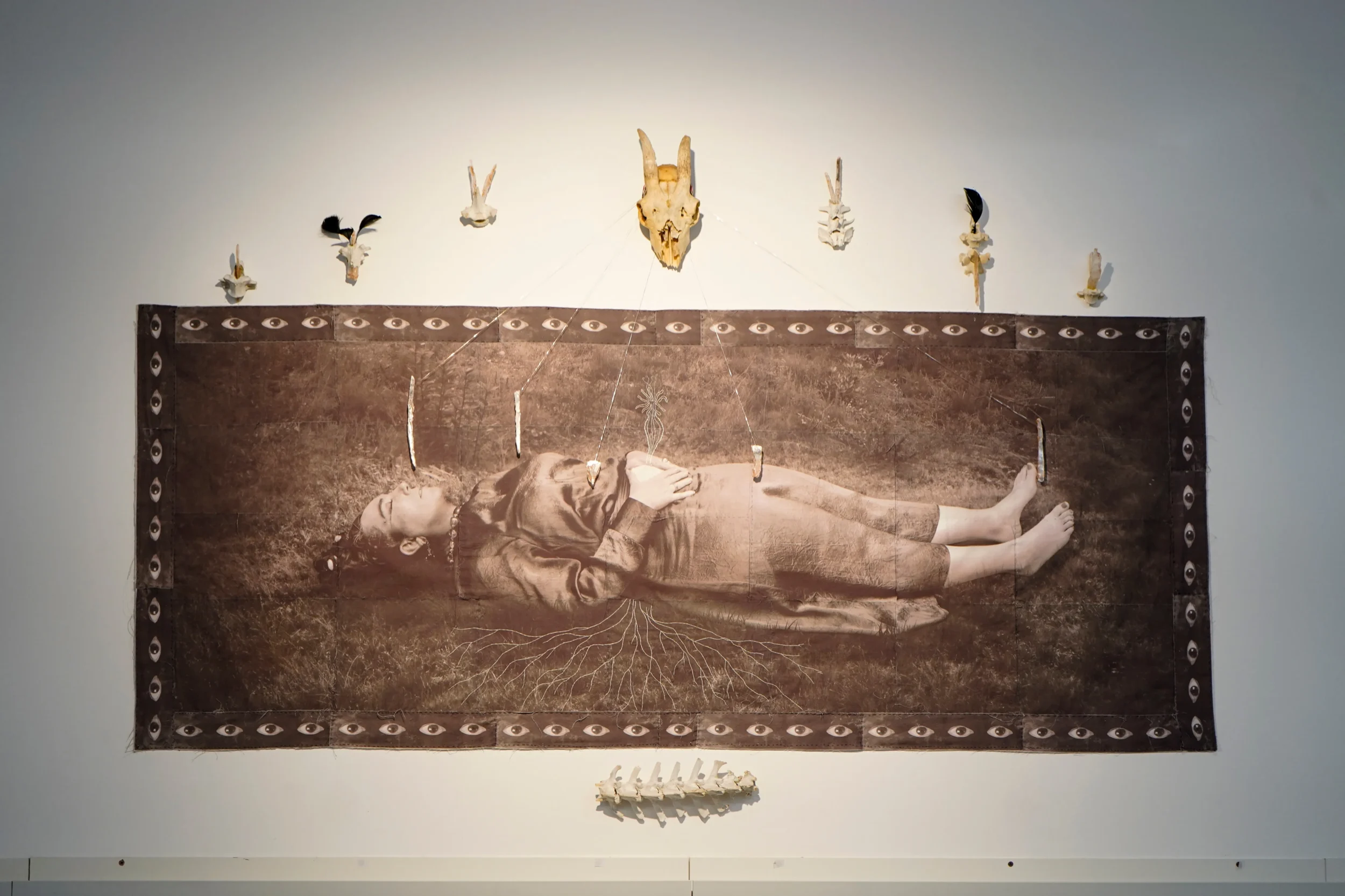
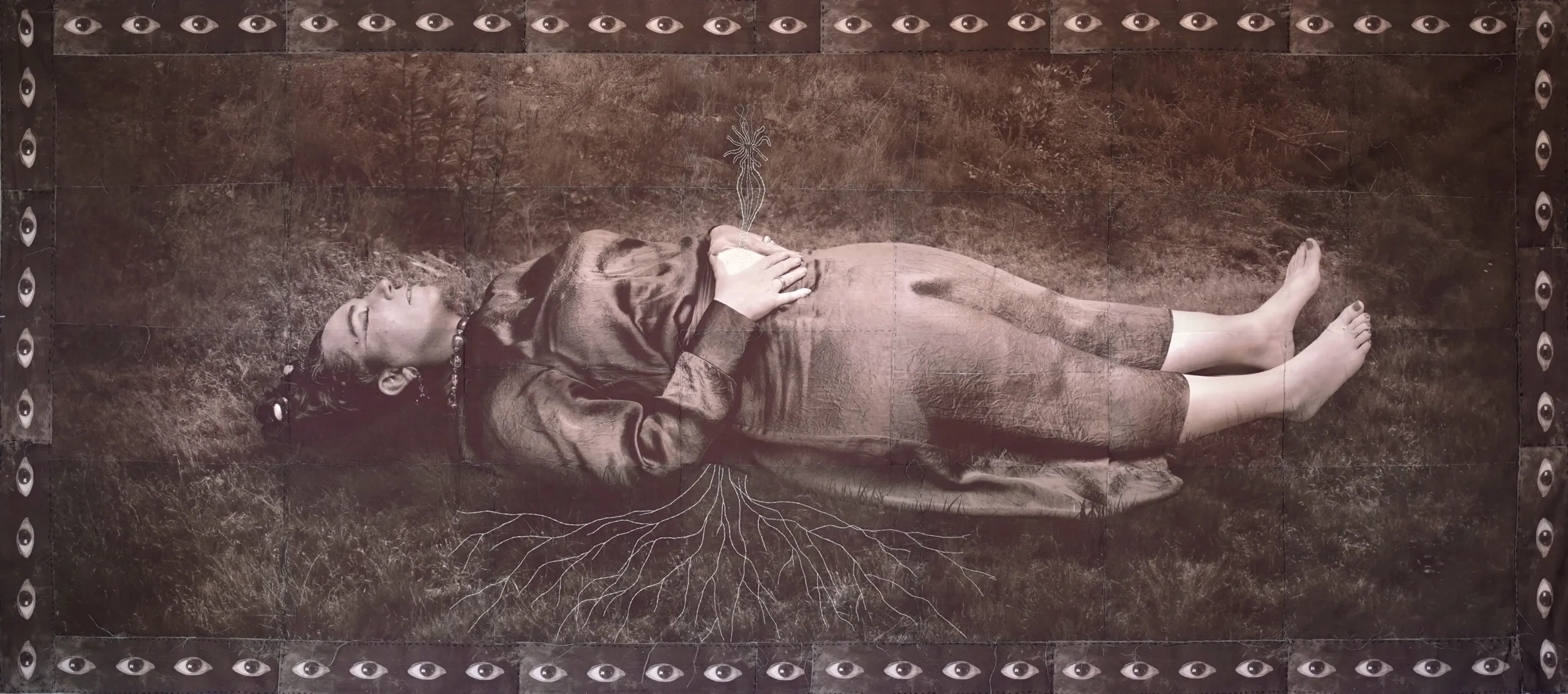
Now, within this body of a poem embroidered on fabric, without pause, there is Rubén González Bonilla. Allowing himself to be fascinated, he uses the image as a poetics woven from fragments of cloth. Threads and needles now begin to write.
Ouka Leele wrote the poem La Fotografía without knowing Rubén González Bonilla. Bárbara surrendered herself to Ouka’s star, as one yields to a divine calling. Rubén surrenders himself to the name of the world the forest understanding the forest as a trail, as a language, as a branching alphabet.
In this offering of experiences, both recognize themselves within a form of
“domestic mysticism,”
where the home becomes a small convent cell and a place from which to cultivate photography as a laboring act, an a cultivator’s photography that must not be pursued or besieged. It is not something to be hunted down or endowed with stealth; rather, it must be watered and cared for. One must grant it the time and patience it needs to sprout, to grow, and to offer its nourishment.
Through this practice, Rubén González Bonilla’s agrosilvopastoral rituals are transformed into artworks, transmitting and embodying those values and orders that hold things together. They seek out the “precise moments” that pass through him and the ways in which the answers that reveal them come into being.
He begins these ceremonies without endowing them with words, thus creating a community without the need for communication. Here, the symbol emerges from Byung-Chul Han’s notion of hospitality, inviting us to reflect on the scarcity of the symbolic. The world González Bonilla invokes on these walls welcomes us in, seeking to make the world gentler, a place where we might once again find ourselves together.
We now inhabit a world overflowing with symbols, yet one in which community has become detached from ritual. González Bonilla photographs and enters a state of complete surrender when he encounters these small communions, moments that mark significant spiritual thresholds in his life.
To write as one walks, to photograph in order to breathe. Everything seems to be a matter of rhythm. Is remembering not also a way of moving forward, just as painting or embroidering are? Memory works slowly. It resembles a small room that changes with every stitch, every layer of paint, every touch and every wound. Nothing happens all at once. It is the repeated gestures, the small impacts, and the traces we leave in the world that ultimately transform the ways of inhabiting it, before we abandon them to the fate of the world.
Awakening from this dream brings us back to the reality of this imaginary table at which I sit, where all the photographs are laid out before me as though I were a god or a tarot reader laying down the cards, choosing and pronouncing their order. “To arrange is to create,” Joana always tells me.
I offer you this small invitation as one might open the door to a house.
Enter slowly.
Dwell within it for a moment.
Perhaps, within its walls, you will find something that belongs to you as well.
Continue walking with this sheet in your hands. Perhaps the symbol has nothing to explain. Perhaps it appears only to accompany us for a stretch of the journey. Accompany me now as one accompanies a seed beneath the earth. Do not ask it for answers. Give it time. Allow this page to remain with you until you reach that deep place where images are still beginning to sprout.
Enrique O. Romero
Curator and Artistic Researcher
With the collaboration of Art Nou 2026
With the support of: